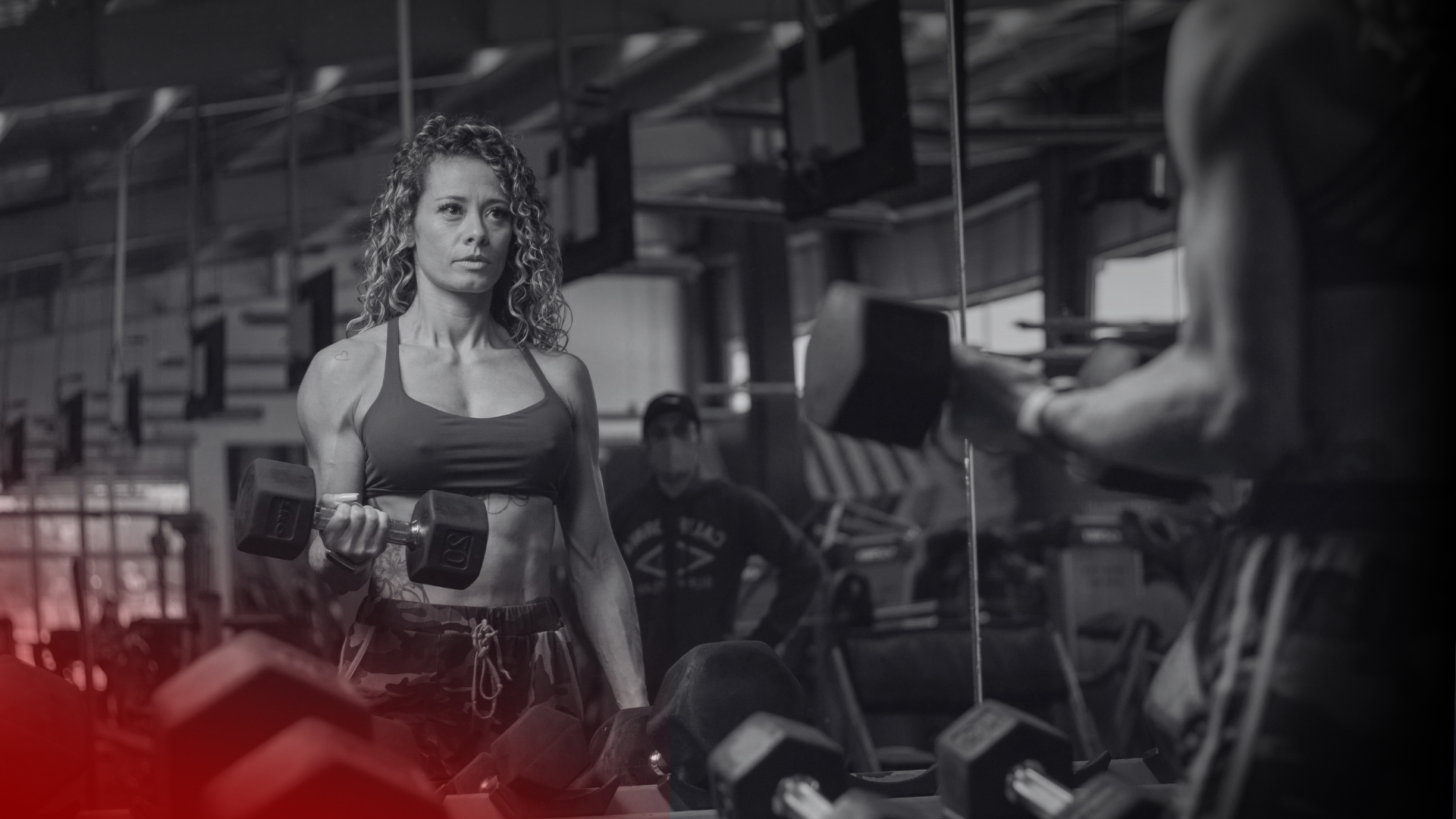
Walk into almost any gym and there’s an unspoken expectation: look like you know what you’re doing, and look like you belong there.
For a lot of people, that pressure builds quietly. It’s not always said out loud, but it shapes how you move, where you stand, even whether you show up at all. Over time, this can feed into body dysmorphia, where your perception of your own body becomes disconnected from reality.
This isn’t limited to beginners. While beginner gym intimidation is real, even experienced lifters can struggle with body image issues when the focus shifts from progress to appearance.
The role of comparison and social pressure in fitness
The National Institute of Mental Health defines body dysmorphia as persistent and intrusive thoughts about perceived physical flaws. While not everyone experiences it at a clinical level, the underlying patterns such as fixation, dissatisfaction, and comparison are increasingly common in fitness spaces.
A big part of the problem is the environment. Gyms (especially with social media tied to fitness) often reinforce unrealistic body standards. Leaner, bigger, more defined. Always something more to aim for. This creates constant comparison in the gym, where people measure themselves against others without context. Different genetics, different timelines, different lifestyles are all flattened into one standard. Over time, this fuels social pressure in fitness, making it harder to separate personal progress from external expectations.
How body dysmorphia affects behavior in training
The impact of body dysmorphia isn’t just mental. It changes how people train too. Instead of focusing on effective programming, people start:
avoiding certain areas of the gym
choosing exercises based on appearance rather than function
overtraining specific body parts
constantly second-guessing their progress
This often increases gym anxiety and reinforces body image issues, especially when results don’t match expectations shaped by unrealistic body standards. It also makes it harder to build confidence in the gym, because progress is no longer measured in strength, performance, or consistency, but in how closely you match a certain look.
Why shifting toward training for results and not appearance matters
One way to counter body dysmorphia is by shifting the focus of training. Instead of chasing appearance, the goal becomes function:
getting stronger
moving better
staying consistent
This is where training for results and not appearance changes the experience entirely. You’re no longer evaluating every session based on how you look. You’re measuring whether you followed your plan, improved your form, or completed your session as intended. Over time, this helps rebuild a healthy relationship with fitness, where progress is grounded in something more stable than appearance alone.
Building a healthier approach to mental health and fitness
Addressing body dysmorphia doesn’t mean ignoring physical goals. It means approaching them in a way that doesn’t undermine your well-being. A more sustainable approach to mental health and fitness usually includes:
limiting constant comparison in the gym
focusing on repeatable routines instead of perfect outcomes
recognizing that progress takes time
Remember that there is absolutely nothing wrong with pouring attention into how you look or to go to the gym expecting highly visible results. We encourage healthy change! The shift away from “look” toward substance isn’t about lowering standards. It’s about choosing a framework that supports long-term progress that is anchored in reality. If frustration does come up along the way, it’s often tied to expectations around progress. That’s something we also explore in this article, where the gap between effort and perceived outcome is broken down in more practical terms.
How SoFit approaches confidence in the gym
For many people, confidence in the gym doesn’t come from pushing harder. It comes from removing uncertainty. At SoFit, the environment is structured to reduce the pressure to “perform.” Sessions are guided, and everyone follows a program, so there’s less focus on how you look and more on what you’re doing.
This structure helps reduce gym anxiety and allows people to focus on execution rather than comparison. Over time, this creates a more healthy relationship with fitness, where progress feels grounded and sustainable. If you’ve ever felt like the gym environment made you second-guess yourself, changing the setup (not just your mindset) can make a difference.
What People Ask About Body Image and Fitness
Navigating body image issues in fitness can feel confusing, especially with so many mixed messages. These are some common questions that come up.
Is body dysmorphia common in fitness?
Many people experience mild forms of dissatisfaction or distorted perception due to comparison and social pressure in fitness. Clinically, however, the International OCD Association has noted that body dysmorphia affects more than 5 million people to nearly 10 million people in the United States alone.
How do I stop comparing myself in the gym?
Limiting comparison in the gym starts with focusing on your own plan. Structured routines reduce the need to look around and measure yourself against others. Our trainers at SoFit will help you focus instead on consistency, structure, and performance, so that things start to feel more stable. In that environment, both physical and mental progress will become easier to sustain.
Can working out improve mental health and fitness?
Yes, but only when approached sustainably. Overemphasis on appearance can worsen body image issues, while balanced training supports mental well-being.